
the
body
key
4 bodies / 5 weights
[ 1 key ]
to 100+ fabrics’
movement at weight
what is body?
The way a fabric moves, falls and constricts,
fabric body is a key part of fabrics’ identity.
Broad use categories like shirting, suiting and coating
informally differentiated between weights and movement styles
for most of human history.
But in a modern age of synthetic fibers and evolving aesthetics,
use categories can inhibit the exploratory creative process,
creating rules where they don’t exist.
Meanwhile more beautiful materials are available to the general
public than ever before; but fashion and
costume designers, home sewers and artists have
no way to find them- and no context for how to use them…
the body key
illuminates
| L1 – silk organza | X1 – nylon tulle | S1 – silk habotai | B1 – silk chiffon |
| L2 – silk satin face organza | X2 – cotton shirting | S2 – wool plain weave suiting | B2 – silk charmeuse |
| L3 – silk gazar, basket quality | X3 – wool flannel suiting | S3 – silk 4 ply crepe | B3 – silk crepe back satin |
| L4 – silk gazar, twill quality | X4 – silk faille | S4 – synthetic scuba knit | B4 – synthetic paillettes |
| L5 – jute burlap | X5 – cotton canvas | S5 – wool coating | B5 – metal chainmail |
4 bodies,
or movement styles
from most crisp to most flowing,
consistently across
5 weights,
relative to their proximity to the human body.
The 4 bodies can be naturally observed in materials
moving and responding to conflict in real time.
Bodies may also be actively demonstrated by introducing
gravitational conflict vertically or horizontally,
producing standing vs pooling behaviors.
L
body
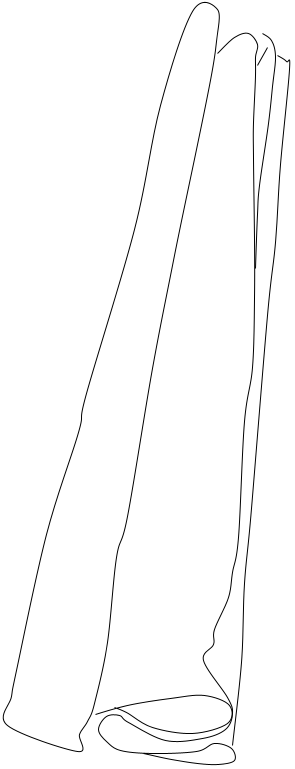
bends reluctantly if forced but prefers to lie flat, 2D
picture: silk organza, L1
X
body

creases sharply and enduringly, naturally holds shape
picture: cotton
shirting, X2
S
body
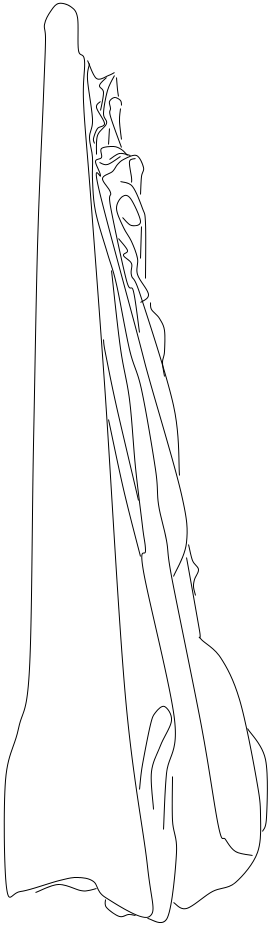
folds evenly and reacts to conflict symmetrically
picture: rayon lining, S1
B
body
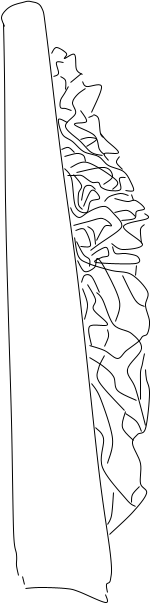
pools like water, highly subjective and impressionable
picture: silk chiffon, B1
these 4 bodies are expressed
consistently across
5 weights:
1.lining
too light weight or sheer to be worn alone; most often worn as lining (inside) or overlay (on top) for other materials
2.top
comfortably worn on the top half of the body; in layers for more weight in full-body designs
3.mid
reasonably worn on the top or bottom half of the body; typically too heavy to use as or require lining
4.bottom
comfortably worn on the bottom half of the body or in structured garments for the top; may be lined for comfort but not required
5.outer
too heavy weight or abrasive to be worn immediately next to the body; requires lining in fashion and often in practical applications
Pairing a body type with a weight number allows you to describe any fabric, for any application, in just 2 digits.
For example – non-stretch cotton denim used for a typical pair of Levi’s is most often X4. Cotton chambray, a shirting-weight material that resembles denim but maintains the same color on the face and back, is a more wearable S2 body. Raw cotton denim, on the other hand, is fully L5 until broken in to a slightly gentler X4.
 charmingfabrics